

High Pay Centre data shows CEO pay in the FTSE 100 reached a record-high in 2025 for the third year in a row. In 2026, the average FTSE 100 CEO took less than three days to earn what the typical UK worker will in all of 2026. It is clear that greater regulation of the gaps in pay between bosses and their workers is necessary.
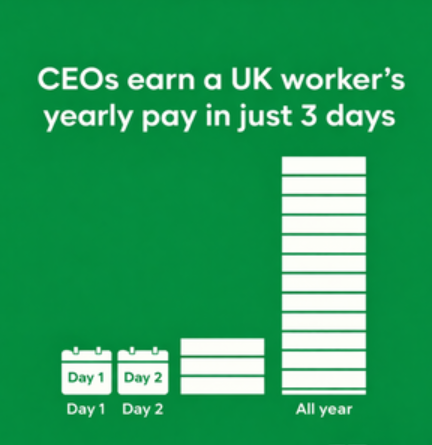
Median FTSE 100 CEO pay (excluding pension) currently stands at £4.4 million, 113 times that of the UK median earner and equating to an hourly pay of £1,353.23. This means it will take the average CEO a little over two days to earn the median UK salary. For the highest-paid CEO in the FTSE 100, Peter Dilnot, it will take him just 2 hours to do so.
Such extreme disparities come in the context of widespread falling living standards and long-term wage stagnation for the average worker. While it is encouraging to see the Employment Rights Act pass into legislation, granting unions enhanced power to negotiate fairer pay on the behalf of workers, it is clear that companies must also face greater costs if they choose to pay their executives such exorbitant fees. This is why we are proposing increasing the tax burden on companies that fall into this category.
The policy would force firms to pay a corporation tax surcharge on their yearly profits if single-figure remuneration for an executive director exceeds a specified multiple of the median UK worker’s salary. This would be a progressive system, beginning with a modest levy on companies with a ratio of 10:1 , before increasing progressively to the highest rate for ratios of 500:1 plus.
This approach could incentivise firms to reduce the level of corporate wealth flowing to a small group of individuals at the expense of wage increases for the wider workforce or long-term investment in the firm. While it would not prevent companies from paying such excessive fees to their executives, the tax receipts would be ring-fenced for investment into education to ensure a shared societal benefit if such a model of high-pay persists.